Tuesday, January 20, 2009

How Slow Is Too Slow? -- Harry Connick Jr.


My wife has a funny expression. It's about a favorite aunt who talks very, very slowly. "You want to reach down her throat and pull out the words," my wife says.

That's exactly how I felt listening to a song on Harry Connick Jr.'s 1990 album "Lofty's Roach Souffle." I wanted to grab his fingers and force the notes out.

Now, I should note that I like this CD very much. It is strictly instrumental, which is unusual for Connick. More important, it comes closer to sounding like Thelonious Monk, without actually playing Monk's music, than anything I've heard in years. Connick has the gestures down cold. The plink and plunk and odd silences. The unlikely notes struck together. It's all the more impressive because these are original compsitions.

But I digress.

The slow tune is called "Little Dancing Girl." I'm sure there's an interesting story behind it, and maybe it's in the liner notes, but I lost them. So now all I have is this track, which runs 7:33 and feels about twice that long. I know it's a matter of preference, but I can't imagine anyone liking a song that drags... so... slowly.

In fairness, I generally prefer romps to ballads. I like swinging Sinatra more than ballad Sinatra. I like bebop Charlie Parker better than sensuous Charlie Parker. And yet, as I get older, I find myself more and more drawn to songs like "Someone To Watch Over Me." The movie "Mr. Holland's Opus" has an especially beautiful version of that classic Gershwin tune.

But this song? Maybe if I play it twice as fast I could find a tune in it. As it is... meh.

Anyway, buy this CD, definitely. But skip this track and go on to the next one, which is a bouncy New Orleans-y ride on the 88s. You'll thank me.

Monday, January 19, 2009

Peter Allen -- jazzy, but not jazz


OK, Peter Allen was not a jazz pianist. But he was still a hell of a pianist -- in the Elton John mold -- and one of the best performers I've ever seen.

By far, his best album was the live "It Is Time For Peter Allen" from 1977. What a shame he never became a superstar.

I saw Peter Allen in concert twice, both times in the early 1980s. He was always a much better performer than recording artist. On vinyl, his songs mostly seemed unenthusiastic and overproduced. In person, he was exactly the opposite. His fans were rabid, and justly so. He was the kind of charismatic, energetic performer who could attract loyal fans -- if only more knew about him.

That's why this album is so affecting. This is the Peter Allen I remember: tender on the ballads, outrageous on the uptempo numbers, and often nostalgic. This album captures that Peter Allen. His second, later live album "Captured Live at Carnegie Hall" is too mannered and overproduced, although it has its moments, too. This is the real thing.

Somewhere, I'm sure, there are more tapes of Peter Allen in concert. I'd love to hear them. Unfortunately, because his star never rose very high -- at least on vinyl -- there's probably no market in it. What a shame.

Tuesday, January 6, 2009

You Can't Return to Forever


The Beatles are gone. I know that. But I keep thinking if I buy just one more Paul McCartney CD, maybe the old magic will return.

Maybe. But it never does.

Paul McCartney is like that. You know how great he was with the Beatles. You even know how great some of his solo records were. And even though you know he'll never write another "Band on the Run," and surely he'll never write another "Sgt. Pepper," you keep hoping.

Chick Corea does that to me, too.

I came to jazz through Chick Corea -- through the back door. I discovered jazz indirectly. It began with the rock bands Chicago and Emerson Lake & Palmer. With Chicago, it was the horn section. With ELP, it was the synths. ELP led directly to Chick Corea and Herbie Hancock and, yes, I confess, even "Switched on Bach."

So I discovered "Return to Forever" and "My Spanish Heart" and "Light as a Feather." That led me to acoustic Chick, including one of my very favorite jazz records, his two-piano duets with Herbie Hancock. Not only is it great music, but it reminds me of a very happy time in my life. Just like Paul and the Fabs.

But then years passed. Chick Corea put out more albums. Some were good, some were so-so, but none seemed as good to my ears as the Chick Corea of old.

Then last year I heard on the radio cuts from a new Chick Corea album, "The Ultimate Adventure." It sounds just like old Return to Forever! The magic was back! I had to have it! So I bought it. And now, after a year of repeated listening, I have to admit: It's good, but not classic.

There are moments. Complex rhythms. Flightly flutes. Middle Eastern motifs. Latin tinges. Both piano AND synths. But no memorable melodies. I know I shouldn't, but I can't help comparing it to 1970s Chick. And while I enjoy it, it's not the same. Maybe it's unfair to think it would be.

So it's OK to enjoy a new Paul McCartney CD now and then, but I never fool myself into thinking the next one will be "Rubber Soul." Unfortunately, I did fool myself for a little while about "The Ultimate Adventure." It's good. I like it in small doses. But Thomas Wolfe was right. You can can't go home again. You can never Return to Forever.

Friday, December 26, 2008

Art Tatum -- Trio Days


I was wrong. I like Art Tatum. But in a slightly different way.

My introduction to Art Tatum, many years ago, was a series of solo piano albums. They left me cold.

No question, the man was gifted beyond belief. He could play faster, more accurately and with a greater sense of fun and originality than almost any pianist between Fats Waller and Thelonious Monk. And yet his solo work never felt right to me. Something always seemed missing. In the end, it's a matter of taste.

Recently I picked up a discarded CD from my public library for the rock-bottom price of $1. It's Art Tatum's "Trio Days." It's a no-name compilation of Tatum's piano-guitar-bass trio from 1942-44.

This I like. And now I know why.

From the very first song, I thought, "Oh my God! He's taking Fats Waller's stride and taking it one step further." I love that. Then I realized something else. The trio sounds exactly like Nat King Cole's trio from the very same period, right down to the guitarist. In fact, I had to check the liner notes to make sure it wasn't the same guitarist. It's not. Cole played with Oscar Moore; Tatum played with Tiny Grimes. But they sound absolutely identical, in a very good way.

At first, I thought Tatum's trio was the missing link between Waller and Cole. I figured Cole was copying the master. Turns out it's the other way around. After reading the liner notes, I now know it was Cole who set the mark with his popular jazz trio and Tatum who came a couple years later with a very similar trio. Not that it's an exact copy. Clearly Tatum is the superior pianist. And his bassist sometimes bows his instrument. And Tatum never sings. Otherwise, their trios are remarkably similar.

Anyway, if the only thing you know about Art Tatum are his acclaimed solo works, you need to find his trio works, too. For me, it was an eye-opener.

For an excellent profile of Tatum on NPR, click here.

Sunday, December 21, 2008

Odd Couple: B3 and Clarinet

On its face, pairing a Hammond B3 organ and clarinet on a jazz album makes about as much sense as eating a peanut butter and vinegar sandwich.

And then again, maybe it's not so bad.

Last year, a local jazz DJ played a cut from a CD that caught my attention. The CD was called "The B3 and Me" and it was by an unknown (to me) clarinetist named Mort Weiss, paired with organist Joey DeFrancesco. It was released in 2006.

Now, I'm a big fan of the B3. I have quite a few Jimmy Smith albums. I also like Jimmy McGriff, Jack McDuff and Shirley Scott. At the same time, I enjoy wild klezmer clarinets and even Benny Goodman's big band. So I bought the strange B3-clarinet CD.

And surprise -- it's good fun.

For the most part, this is a traditional B3 trio, with organ, guitar and drums. Most of the music would be familiar to Jimmy Smith fans. But in every song where a soulful sax might take the spotlight, there's a clarinet instead. It fits.

The music is mostly bebop, swing and ballads, and it is very fine. I particularly enjoy Craig Ebner's taseful guitar. It goes without saying that DeFrancesco is terrific. If you like the B3, he's the guy to watch these days.

Oddly enough, DeFrancesco isn't credited on the cover or anywhere else in the liner notes. Something about a dispute with his label. But it's not like the producer tried to hide him. The CD cover states, "FEATURING A VERY SPECIAL GUEST: The Finest Jazz Organist in the World, Concord Recording Artist... You Guessed It."

OK, that's not very subtle. But anyway, if you like B3 combos, this is one to try.

(There's a very thorough review of this album at AllAboutJazz.com here, including a longer explanation of why DeFrancesco is not credited in the liner notes.)

Thursday, December 11, 2008

Musically corny for Christmas, and that's OK


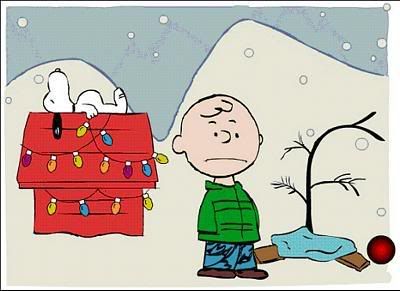
"A Charlie Brown Christmas" is the corniest jazz-Christmas album ever made.

And that's OK. It's even good.

I know the dig. What Vince Guaraldi played wasn't jazz, it was lounge music. It was sentimental. It was lightweight. It was sappy.

Yep. All of that.

But so what?

Christmas time is about memories. That's what the smells, the sights, the tastes and the music are about. Some are family memories, some are communal memories. "A Charlie Brown Christmas" is a TV show with a long, sappy communal memory.

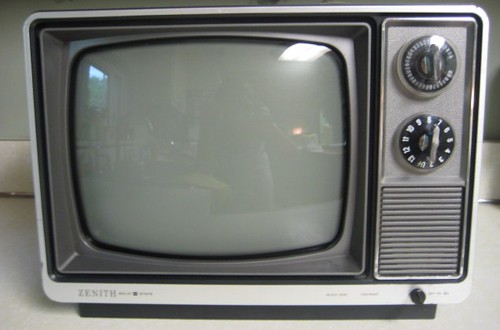
If you're a certain age, you only need to hear the opening strains of the children's choir singing "Christmas Time is Here" and it all comes back. Linus and the sincere speech. Charlie Brown and the pathetic tree. And Dolly Madison snack cakes. I never ate them, but I can't separate the two things -- Charlie Brown and Dolly Madison. Watching on an old black and white TV in my parent's living room in the 1960s and 70s.

So go ahead. Tell me the show is goofy and the music is shallow. Doesn't matter.

Music evokes memories and feelings. And that's good.

You blockhead!

Saturday, December 6, 2008

Horace Silver -- young and old


With musicians, and artists generally, there's a tendency to think the best work is the earliest.

It's usually true. Paul McCartney was never better than when he recorded with the Beatles. Chuck Berry's best work was the early hits like "Johnny B. Goode" and "Roll Over Beethoven." Tom Wolfe hasn't written anything as good as "The Right Stuff" and "The Electric Kool-Aid Acid Test."

So it is, too, with jazz musicians. Dizzy Gillespie's seminal work came in the 1940s and the birth of bebop. Chick Corea, while still solid and dependable, did his best work with Return to Forever.

There are exceptions, of course. Miles Davis constantly reinvented himself over a long period of years. Duke Ellington was a terrific composer and leader until the day he died.

And so, consider Horace Silver.

Early in my jazz education, I found a 2-CD set called "A Night at Birdland." It was recorded in 1954 by a fabulous quintet led by Art Blakey. Horace Silver was the piano player, only 26 years old, and he wasn't even the best musician in the group, or even second-best, and maybe not even third-best. There was Blakey on drums, the sensational Clifford Brown on trumpet, and the underrated Lou Donaldson on sax.

This is the very definition of hard bop. It's a 5-star ensemble playing at the peak of its power. Every song is masterful. The ballads are tender and poignant. The bop is breakneck and invigorating. Every one of the musicians is at the top of his game. It's likely Blakely never recorded a better live set -- and that's saying something. It's not a Horace Silver record, per se. Silver was still young and on the cusp of fame. But he's brilliant. If you buy just one Horace Silver CD, this would be my pick.

Fast forward 42 years to 1996.

Horace Silver was 68 and past his prime. A critic tagged him "the hardbop grandpop." Silver liked the name so much, he used it as an album title. Following Blakey's lead, he surrounded himself with younger musicians, notably four horn players. And he wrote 10 new songs.

I won't pretend that "The Hardbop Grandpop" was the Jazz Messengers reincarnated. But it's very good. It's probably better than a 68-year-old has any right sounding. The mood is different. It's not hard bop exactly, despite the title. There's more soul. The brass really takes the forefront. Silver takes his solos, and they are very good, but he mostly lets the younger guys shine. (Though Silver wrote corny lyrics for half of the songs, he wisely decided against using a singer. The CD is entirely insrumental, though he included the lyrics in the liner notes, for anyone who wants to follow along.) It includes tributes to Coleman Hawkins and Dexter Gordon and even a tune based on a teapot whisle. All of it is wonderful and lyrical and soulful.

No, it's not vintage Silver. It's not as good as the Blakey/Jazz Messenger stuff. So maybe it's only 4-star CD. With legends in late-career, you adjust your pallette. This is enjoyable music. It's not fair to compare Paul McCartney in 2007 to Paul McCartney in 1968. It's the same in jazz. Even so, sometimes a lion in winter is still a majestic thing.