Showing posts with label Chick Corea. Show all posts

Tuesday, January 6, 2009

You Can't Return to Forever


The Beatles are gone. I know that. But I keep thinking if I buy just one more Paul McCartney CD, maybe the old magic will return.

Maybe. But it never does.

Paul McCartney is like that. You know how great he was with the Beatles. You even know how great some of his solo records were. And even though you know he'll never write another "Band on the Run," and surely he'll never write another "Sgt. Pepper," you keep hoping.

Chick Corea does that to me, too.

I came to jazz through Chick Corea -- through the back door. I discovered jazz indirectly. It began with the rock bands Chicago and Emerson Lake & Palmer. With Chicago, it was the horn section. With ELP, it was the synths. ELP led directly to Chick Corea and Herbie Hancock and, yes, I confess, even "Switched on Bach."

So I discovered "Return to Forever" and "My Spanish Heart" and "Light as a Feather." That led me to acoustic Chick, including one of my very favorite jazz records, his two-piano duets with Herbie Hancock. Not only is it great music, but it reminds me of a very happy time in my life. Just like Paul and the Fabs.

But then years passed. Chick Corea put out more albums. Some were good, some were so-so, but none seemed as good to my ears as the Chick Corea of old.

Then last year I heard on the radio cuts from a new Chick Corea album, "The Ultimate Adventure." It sounds just like old Return to Forever! The magic was back! I had to have it! So I bought it. And now, after a year of repeated listening, I have to admit: It's good, but not classic.

There are moments. Complex rhythms. Flightly flutes. Middle Eastern motifs. Latin tinges. Both piano AND synths. But no memorable melodies. I know I shouldn't, but I can't help comparing it to 1970s Chick. And while I enjoy it, it's not the same. Maybe it's unfair to think it would be.

So it's OK to enjoy a new Paul McCartney CD now and then, but I never fool myself into thinking the next one will be "Rubber Soul." Unfortunately, I did fool myself for a little while about "The Ultimate Adventure." It's good. I like it in small doses. But Thomas Wolfe was right. You can can't go home again. You can never Return to Forever.

Saturday, December 6, 2008

Horace Silver -- young and old


With musicians, and artists generally, there's a tendency to think the best work is the earliest.

It's usually true. Paul McCartney was never better than when he recorded with the Beatles. Chuck Berry's best work was the early hits like "Johnny B. Goode" and "Roll Over Beethoven." Tom Wolfe hasn't written anything as good as "The Right Stuff" and "The Electric Kool-Aid Acid Test."

So it is, too, with jazz musicians. Dizzy Gillespie's seminal work came in the 1940s and the birth of bebop. Chick Corea, while still solid and dependable, did his best work with Return to Forever.

There are exceptions, of course. Miles Davis constantly reinvented himself over a long period of years. Duke Ellington was a terrific composer and leader until the day he died.

And so, consider Horace Silver.

Early in my jazz education, I found a 2-CD set called "A Night at Birdland." It was recorded in 1954 by a fabulous quintet led by Art Blakey. Horace Silver was the piano player, only 26 years old, and he wasn't even the best musician in the group, or even second-best, and maybe not even third-best. There was Blakey on drums, the sensational Clifford Brown on trumpet, and the underrated Lou Donaldson on sax.

This is the very definition of hard bop. It's a 5-star ensemble playing at the peak of its power. Every song is masterful. The ballads are tender and poignant. The bop is breakneck and invigorating. Every one of the musicians is at the top of his game. It's likely Blakely never recorded a better live set -- and that's saying something. It's not a Horace Silver record, per se. Silver was still young and on the cusp of fame. But he's brilliant. If you buy just one Horace Silver CD, this would be my pick.

Fast forward 42 years to 1996.

Horace Silver was 68 and past his prime. A critic tagged him "the hardbop grandpop." Silver liked the name so much, he used it as an album title. Following Blakey's lead, he surrounded himself with younger musicians, notably four horn players. And he wrote 10 new songs.

I won't pretend that "The Hardbop Grandpop" was the Jazz Messengers reincarnated. But it's very good. It's probably better than a 68-year-old has any right sounding. The mood is different. It's not hard bop exactly, despite the title. There's more soul. The brass really takes the forefront. Silver takes his solos, and they are very good, but he mostly lets the younger guys shine. (Though Silver wrote corny lyrics for half of the songs, he wisely decided against using a singer. The CD is entirely insrumental, though he included the lyrics in the liner notes, for anyone who wants to follow along.) It includes tributes to Coleman Hawkins and Dexter Gordon and even a tune based on a teapot whisle. All of it is wonderful and lyrical and soulful.

No, it's not vintage Silver. It's not as good as the Blakey/Jazz Messenger stuff. So maybe it's only 4-star CD. With legends in late-career, you adjust your pallette. This is enjoyable music. It's not fair to compare Paul McCartney in 2007 to Paul McCartney in 1968. It's the same in jazz. Even so, sometimes a lion in winter is still a majestic thing.

Monday, November 10, 2008

Eldar (piano) vs. Eldar (beeps and boops)


There are two Eldars and I know which one I don't like.

Hint: It's the newer one.

Let's start with a confession. I'm an old fart. I don't try to hide it. I like acoustic jazz. I like old jazz. Sometimes I like electric jazz, too, but I don't like them together and I can't think of a single instance where mixing them up on one CD worked.

Hence Eldar.

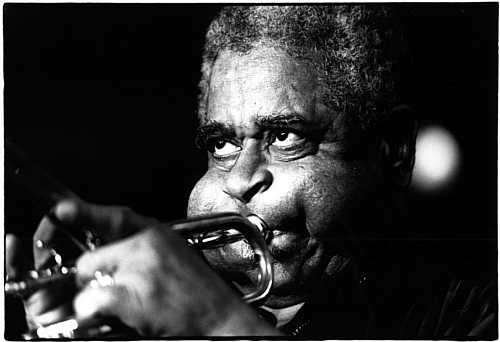
Now, I don't mind the kid's odd name or the fact that he looks like he's 12 years old. There are plenty of jazz guys with odder names and weirder faces. (What's with those cheeks, Dizzy?)

And I really liked his first CD from 2005, the one called just "Eldar." That super-duper-fast version of "Sweet Georgia Brown" blows me away every time. So does "Maiden Voyage" and "Moanin'" and "Watermelon Island." Although, come to think of it, all of those are covers of old jazz standards. The originals and the slow tunes -- not so much. But I do generally like the trio format and the solo piano tunes.

Then there's last year's CD, "Re-Imagination."

Fusion has its place. I like Return to Forever. But one thing I never heard Chick Corea do was mix his acoustic and electric stuff all on one CD. But that's what Eldar does on "Re-Imagination."

Let's start with the worst stuff. On this CD, there two short, weird electronic "pieces" with beeps and boops and buzzes. I don't get it. Then there are pieces that sound sorta-kinda like a cross between pop and jazz with acoustic piano and electric noise and some synthesizer thing in the background. One of these pieces is 8 minutes long. It leaves me cold.

And then, smack in the middle of the CD, there's this perfect track. It's a joyful, old-time piano romp on "Place St. Henri" by Oscar Peterson. If the kid left it at that, I'd be a happy old fart.

But then Eldar wanders off into some not-very-inspiring slow dreamy thing, followed by some more electronic stuff.

Look, I like Eldar. I admire his experimental streak. I love his chops. But I don't love "Re-Imagination." I hope he finds his own voice sometime soon, and I hope it doesn't include any beeps or boops.